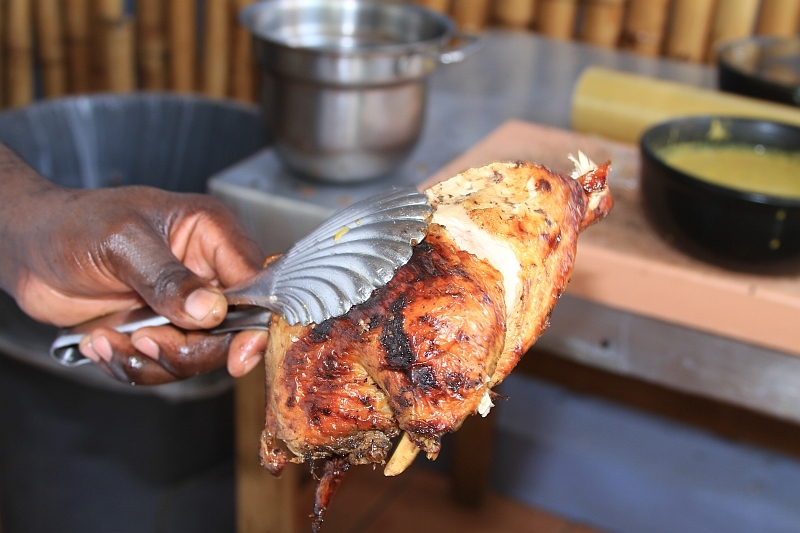
Guyana is technically in South America — but ask a Guyanese person where their food comes from and they'll say the Caribbean without hesitation. The country's cuisine is one of the most culturally layered in the entire Western Hemisphere: built on Amerindian foundations thousands of years old, shaped by the West African cooks who were enslaved and brought to Guyana's sugar plantations, transformed by the Indian indentured laborers who arrived in the 19th century, and touched by Dutch and British colonial influence. The result is a cuisine that tastes like nowhere else on Earth.
Despite this extraordinary history, Guyanese food barely registers on the global culinary radar. Most food writing in English doesn't cover it. Guyanese restaurants outside of cities with large Guyanese diaspora populations are rare. This is a genuine loss. These are some of the most interesting dishes in the Americas.
Guyanese Pepper Pot: The Stew That Cannot Die
Start here. Guyanese pepper pot is the country's defining dish, eaten on Christmas morning before church, the pot having simmered gently since Christmas Eve. Dark, impossibly rich, spiced with cinnamon, cloves, and whole Scotch bonnet peppers, it coats your mouth with a sweetness and depth that is entirely unlike any other stew you've encountered.
The secret is cassareep — a thick black syrup made from bitter cassava juice, cooked down until concentrated and dark. Cassareep is an ancient Amerindian ingredient developed by the Arawak and Carib peoples who had lived in Guyana long before European contact. They discovered that cooking the toxins out of bitter cassava produces both an edible tuber and this remarkable syrup that prevents bacterial growth. A pepper pot preserved with cassareep and brought to a boil every day can last indefinitely at room temperature. Some Guyanese families claim their pot has been running for decades, the same cassareep-rich broth continuously replenished with fresh meat and spices.
This is not folklore. Cassareep contains compounds that are genuinely antimicrobial. The pepper pot pot is a direct, unbroken line to pre-Columbian Amerindian food science, still being practiced in Guyanese kitchens every Christmas. You cannot find this dish anywhere else in the world in quite this form.
Metemgee: The Coconut Stew of Everything
Metemgee is Guyana's other essential stew — a creamy, coconut milk-based dish that demonstrates the West African dimension of Guyanese cooking. Dumplings, ground provisions (cassava, eddoe, plantain, yam, sweet potato), and salted fish or fresh fish are cooked together in coconut milk seasoned with thyme, garlic, and wiri wiri pepper until the broth becomes thick and fragrant and everything has absorbed the sweetness of the coconut.
The dish is a close relative of Jamaican run-down and Trinidadian oil down — all of them West African coconut stews adapted to Caribbean and South American ingredients. But metemgee has its own character: the use of cassava alongside other root vegetables, the wiri wiri pepper's fruity heat (similar to Scotch bonnet but more floral), the practice of adding fried plantain as a garnish. It is comfort food at its most generous — a pot that feeds a crowd and gets better the next day.
Cook-Up Rice: Sunday in a Pot
Cook-up rice is Guyana's Sunday dish — a one-pot rice and peas preparation cooked in coconut milk with whatever protein is available: chicken, salted pig tail, beef, or a mix of all three. Black-eyed peas or kidney beans are the traditional legume. Thyme, garlic, wiri wiri, and shadow beni (culantro — a herb that tastes like a more intense, slightly citrusy cilantro) season the pot.
What distinguishes cook-up rice from Trinidadian pelau or Jamaican rice and peas is the Guyanese insistence on cooking everything together from the beginning — the meat, the beans, the rice, the coconut milk, all added at different stages but all cooked in the same pot until the rice has absorbed every flavor in the dish. The result is savory and rich in a way that separately cooked components never achieve. It is the Guyanese answer to the question: what do you make when you want to feed everyone and have them feel genuinely cared for?
Roti and Curry: The Indo-Guyanese Tradition
When British colonists ended slavery in the 1830s, they brought Indian indentured laborers to work the sugar plantations — a system that was slavery by another name, but one that brought an entire culinary tradition to Guyana's shores. Today, roughly 40% of Guyana's population is of Indian descent, and Indo-Guyanese cooking is as central to the national cuisine as Afro-Guyanese or Amerindian traditions.
Guyanese roti — particularly dhal puri roti, a flatbread stuffed with seasoned split peas — is different from Indian roti in ways that take decades of practice to fully articulate. The texture is softer, the filling more heavily seasoned, the pea-to-bread ratio calibrated to a Guyanese standard that is distinct from anything on the subcontinent. Eaten with chicken curry (Guyanese curry is redder and spicier than most Indian versions, built on a different blend of masala that evolved over 150 years of Caribbean adaptation) or goat curry, it is one of the most satisfying meals you can eat.
Why Guyanese Food Deserves More Attention
The layering of cultures in Guyanese food is not superficial — it is structural. The Amerindian ingredients (cassava, cassareep, wiri wiri pepper, ground provisions) form the base. The West African cooking techniques (coconut milk stews, one-pot braising, preserved salted meats) provide the method. The Indian spice tradition adds the seasoning vocabulary. The Dutch and British colonial influence appears in the use of salted and preserved meats, the practice of bringing everything to table in large communal portions.
Each influence is traceable to a specific historical moment — specific ships arriving, specific communities building specific food traditions on a specific landscape. Guyanese food is edible history in the most literal sense. Every dish is a document.
Start Here
Make Guyanese pepper pot first. It requires cassareep — find it at Caribbean grocery stores, and do not substitute anything for it; the dish does not work without it. Source the wiri wiri peppers if you can (Scotch bonnet is an acceptable substitute). Cook it low and slow. Eat it with bread the next morning. You'll understand immediately why this dish has been keeping Guyanese families together on Christmas morning for generations. Then explore the broader Caribbean food culture on FlavorBridge — the traditions that connect Guyana to the islands and explain why this South American nation feels, at the table, completely Caribbean.